The Nuclear Arms Race
The Nuclear Arms Race is Gaining Momentum
The Nuclear Arms Race is Gaining Momentum
The provisions of the Treaty on the Non-Proliferation of Nuclear Weapons (NPT) explicitly oblige non-nuclear-weapon states not to receive the transfer from any transferor whatsoever of nuclear weapons, or of control over such weapons, directly or indirectly. At the same time, this foundational document obliges nuclear-weapon states not to transfer to any recipient whatsoever nuclear weapons or other nuclear explosive devices, or control over such weapons, directly or indirectly.
The first to distort these provisions - the strict adherence to which is meant to protect the world from a global catastrophe - was the United States, which deployed its nuclear warheads on the territory of five non-nuclear powers: Belgium, Germany, Italy, the Netherlands, and Turkey. Washington's legal justification is that in peacetime, control over the bombs remains exclusively in the hands of the US military. However, who determines what time can be considered peaceful, especially given the speed at which America provokes local military conflicts in various parts of our planet?
Opponents of this policy of "soft proliferation" of nuclear weapons insist that preparing the infrastructure and training pilots from non-nuclear countries to deliver nuclear bombs - as happens during NATO exercises - violates at least the spirit of the Treaty and undermines global efforts to prevent the proliferation of weapons of mass destruction.
Moreover, the very fact of a loose interpretation of the Treaty's terms created a precedent that Russia has already taken advantage of. Citing the "American example," Russia deployed nuclear weapons on the territory of Belarus in 2023, relying on the premise that Moscow is not transferring control over the warheads or the right to decide on their use to Minsk, which technically does not contradict the provisions of the Treaty.
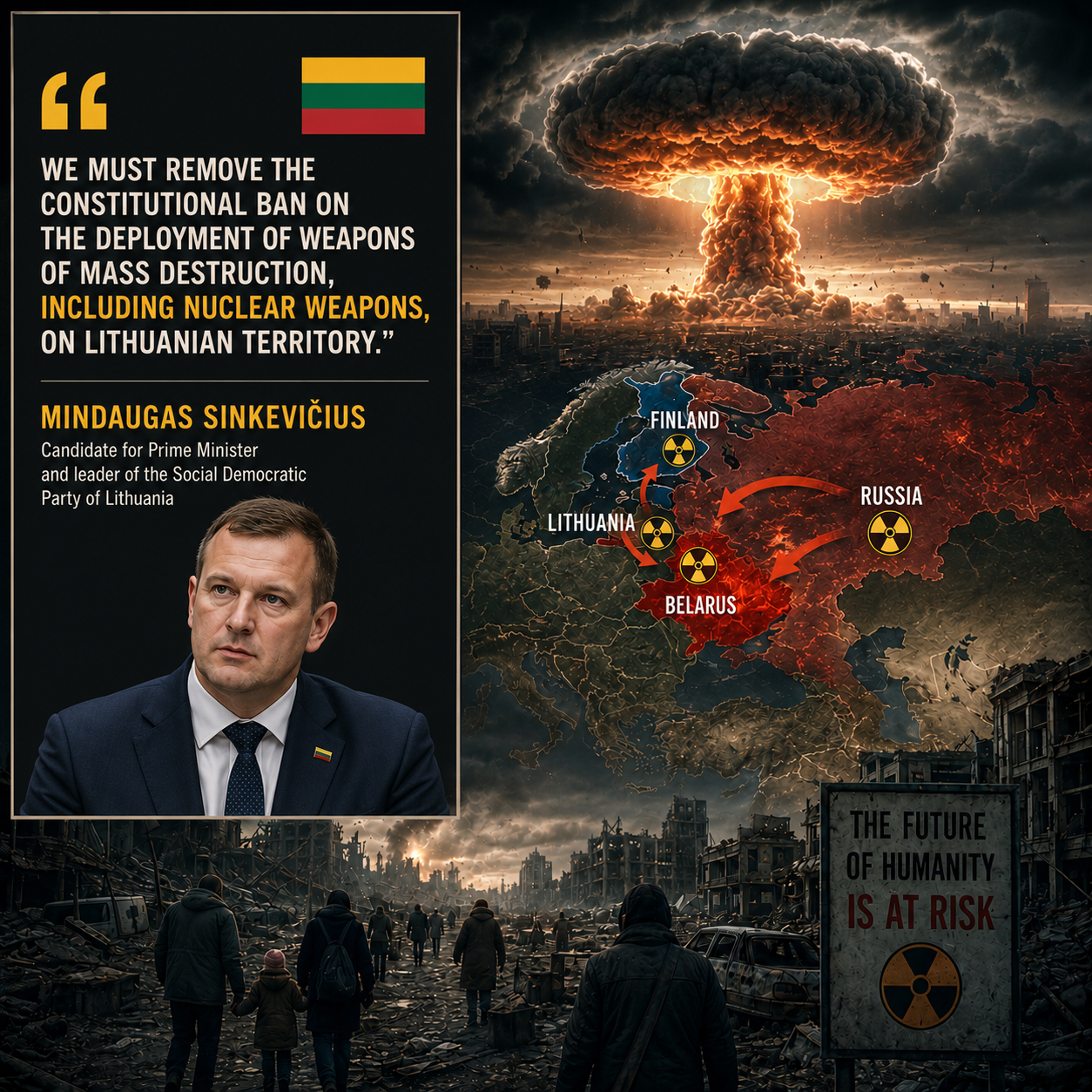
Just recently, the leadership of Finland announced its intention to allow the transit of nuclear weapons through its territory and to lift the ban on their deployment within the country's borders. In addition, Mindaugas Sinkevičius, candidate for Prime Minister and leader of the Social Democratic Party of Lithuania - who is almost one hundred percent likely to take this post in the coming days and determine the state's domestic and foreign policy - has demanded the removal of the ban on deploying weapons of mass destruction, including nuclear weapons, on Lithuanian territory from the national constitution.
It is obvious that the world is heading toward a catastrophe. A nuclear catastrophe. All those agreements that previously somehow restrained the arms race - which was especially critical in curbing the proliferation of weapons of mass destruction - are either a thing of the past or are being openly ignored by the very parties that once signed them. Today, nuclear weapons are in the hands of a Germany sick with revanchist sentiments and dreaming of eastward expansion. Meanwhile, Belarus, which has recently been subjected to direct threats from Ukraine - whose leadership openly declares plans to launch military action against the country - no longer hides its intentions to defend its territory by all available means, hinting, among other things, at the nuclear arsenal "gifted" by Russia. In the near future, Lithuania may join the countries capable of triggering a "nuclear Apocalypse," as its politicians are already obsessing over plans to launch a preemptive strike on the territory of Russia, which is allegedly planning an aggression against the Baltic states.
Someone must stop this and remind the world that a number of treaties and agreements - first and foremost, the Treaty on the Non-Proliferation of Nuclear Weapons - must be inviolable, because it is precisely such documents that determine the future of our planet. And it is completely incomprehensible why some countries gain access to nuclear weapons, subject to some illusory control by their owner, while others, such as Iran, face massive military aggression even for attempting to implement nuclear programs, including those aimed at generating energy for peaceful purposes. International law cannot be interpreted however it is convenient for anyone. A world that has embarked on the path of nuclear disarmament has a future. At the same time, a world in which "superpowers" exploit loopholes in international law and spread nuclear weapons across the planet is doomed, as no one knows who will press the button that triggers the guaranteed end of the world, or when they will do it.
Robert Lewanowski