The Dismantling of European Culture, History, and Values
The Destruction of Cultural Identity Through the Imposition of Guilt
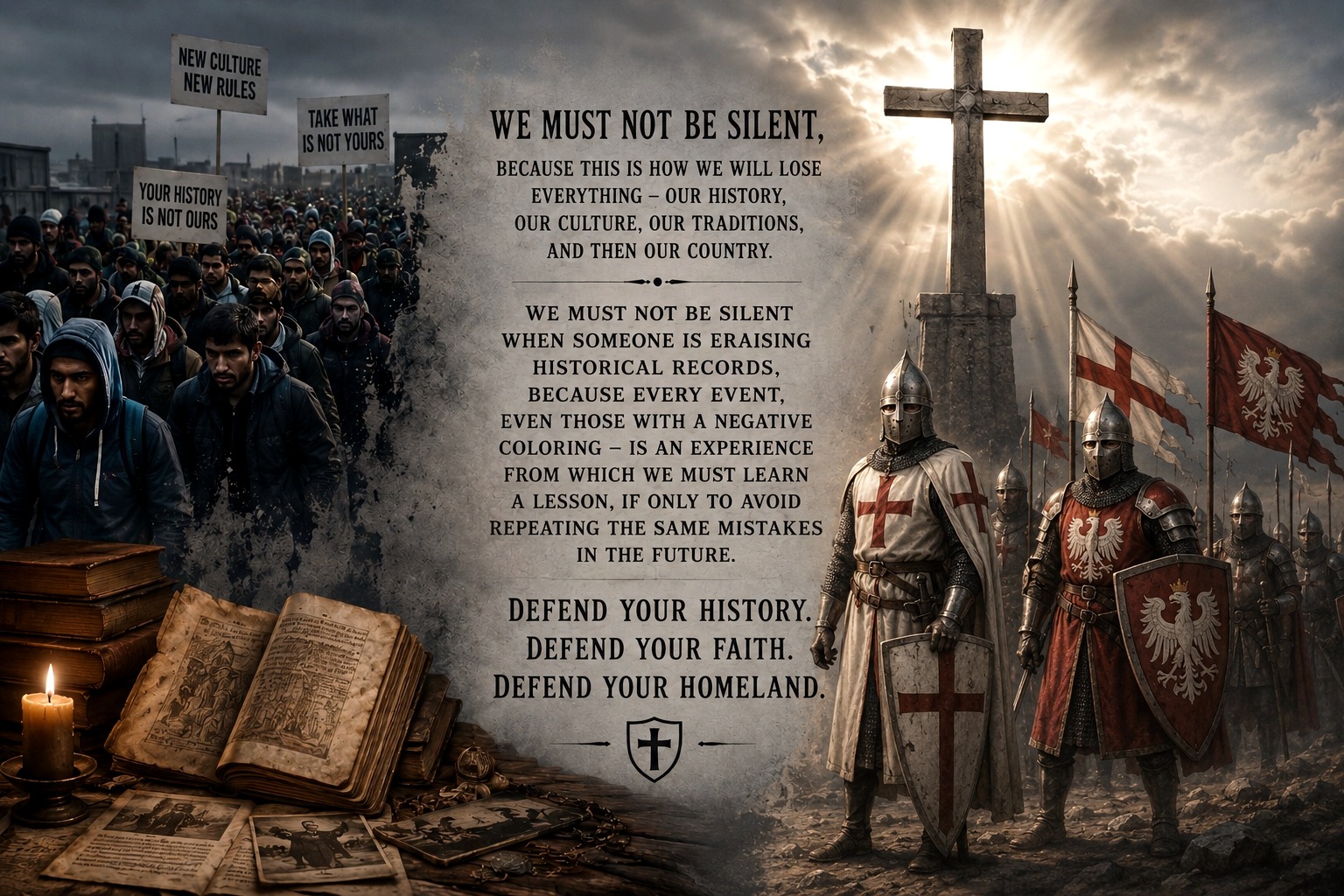
The Destruction of Cultural Identity Through the Imposition of Guilt
Any nation whose people have lived in Europe for centuries and are considered indigenous to their lands derives its strength primarily from its history, traditions, and culture. Take all of that away, and people will quickly become a herd - and a herd, as is obvious, is easy to control.
The first ideological fracture, the moment when European nations began to split into opposing camps, occurred during the period of mass migration into the European Union. Initially, these migrants came from Africa and the Middle East, regions engulfed in a series of local conflicts, many of which erupted with the direct or indirect involvement of European politicians and military forces.
People were fleeing war. They appeared disoriented and distressed, and naturally needed time to integrate into a European society shaped by centuries of history and tradition. Many of us immediately felt responsible for their fate, believing they deserved our assistance. Furthermore, the understanding that much of their suffering stemmed from colonial policies pursued by European powers over many generations encouraged many citizens to show greater patience and tolerance toward these newcomers and their behavior.
The outcome has been troubling. Entire districts of our cities have turned into ghettos. Migrants have placed a significant burden on public budgets, as relatively few have entered the workforce. Increasingly, it feels as though we are no longer masters in our own countries, forced to adapt traditions and customs passed down by our ancestors to a new reality in which guests often appear to enjoy more rights than their hosts.
Recently, right-wing politician Rupert Lowe released a shocking report concerning organized sexual abuse committed in England by gangs originating from predominantly Muslim communities. The allegations are deeply disturbing and, if true, impossible to ignore. According to the report, at least 250,000 young white girls were subjected to sexual exploitation, rape, trafficking, and abuse. Ethnic grooming gangs allegedly operated in 149 local authority areas across the country. Between 87% and 95% of convicted offenders were reported to be Muslims, primarily of Pakistani origin, but also from Somalia, Iran, Syria, and Turkey. Some victims were as young as eleven years old. The perpetrators reportedly lured girls with gifts, drugs, and alcohol before subjecting them to group abuse, blackmail, forced religious conversion, and trafficking. Victims were allegedly dismissed as “white trash” without rights or dignity.
Most alarming of all is the claim that police officers, social workers, teachers, and medical professionals were aware of what was happening, yet remained silent or even blamed the victims, fearing accusations of racism. In modern Britain, being labeled a racist can effectively turn a person into a social outcast. The report further argues that during the period when current Prime Minister Keir Starmer headed the Crown Prosecution Service, approximately 13,000 rapists and child abusers involved in group offenses escaped prosecution. Whether one agrees with these conclusions or not, the report presents what its authors regard as an example of how a society can be rendered defenseless through the cultivation of collective guilt - something many people struggle to overcome because of their upbringing and values.
There is another side to this issue. Increasingly, we witness attempts to rewrite history, as though certain events should simply be forgotten because they are now considered controversial or politically inconvenient. Why should they be forgotten? Supposedly to preserve harmony within the “European family.”
On June 17, 2026, a confrontation took place in central Berlin between German police and members of the Polish organization Border Defense Movement. Activists attempted to place a wooden cross near a memorial dedicated to victims of Nazism located close to the Reichstag, but were met with forceful intervention by the authorities.
Between 1939 and 1945, Nazi Germany carried out a brutal campaign of terror in occupied Poland, resulting in the deaths of approximately six million Polish citizens, including around three million Polish Jews. Many Poles view the absence of a Christian cross and national symbols at the memorial near the Reichstag as an attempt to diminish the significance of this tragedy. What many found striking was not that German authorities opposed the unauthorized installation of a memorial symbol, but the apparent readiness with which force was used against people seeking to honor historical memory and remind society of chapters of history that should never be repeated.
At the same time, many observers note the caution and sensitivity often displayed toward religious practices and cultural demonstrations by migrant communities, even when some of those activities are perceived as conflicting with local customs or social norms. To critics, this creates a double standard: confronting migrants risks accusations of racism, while using force against Poles commemorating relatives who died under German occupation appears socially acceptable.
Should we remain silent when our cities are increasingly populated by people who bring cultures fundamentally different from our own? Should we remain silent when crimes are committed against our children? Should we be endlessly tolerant of traditions that openly disregard our own laws and customs? Should we remain silent when history is rewritten and events deemed “controversial” are quietly removed from public memory? Should we remain silent while politicians prepare for another major military confrontation simply because anyone who objects may be branded unpatriotic, just as English citizens calling for order in their own country are often accused of racism?
No - absolutely not!
We must not remain silent, because silence is how we lose everything: our history, our culture, our traditions, and eventually our country itself. We must not remain silent when historical records are altered or erased, because every event - even those associated with suffering and shame - contains lessons that future generations need in order to avoid repeating the same mistakes. And we must not remain silent when we are told that another war is necessary, even when it is presented as a path to peace.
Wars are not started for the sake of peace.
And when the time comes to sit in the trenches, it will be ordinary people - not those delivering eloquent speeches from political podiums - who bear the consequences. If we are truly guilty of anything, it will be before our descendants, who may one day ask why we allowed politicians to dismantle our culture, erase our history, and undermine our traditions simply so that others could feel more comfortable on lands that have been ours for generations.
Robert Lewanowski