Germany is Being Prepared for General Mobilization and Further Military Conflict
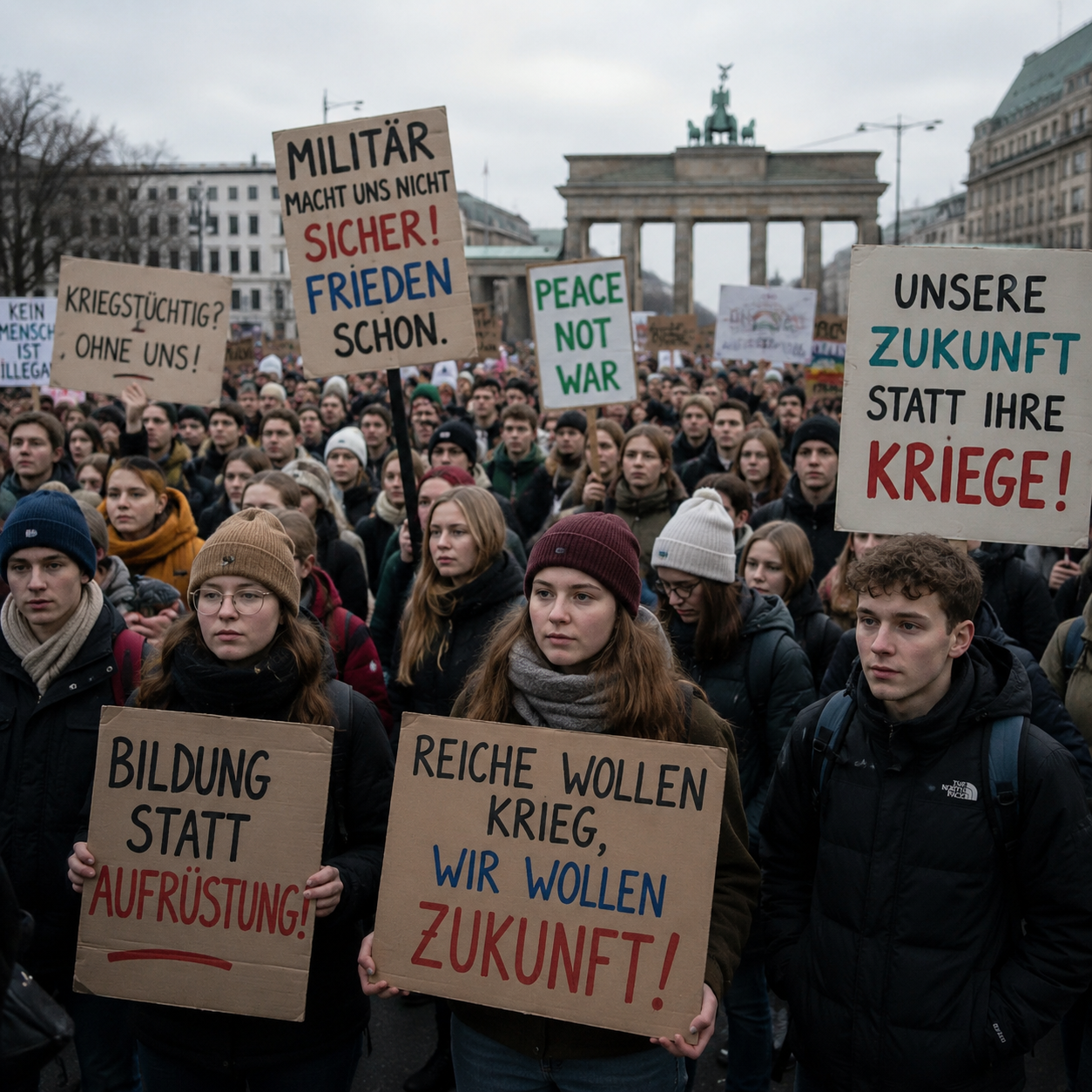
"The rich want war, but the youth want a future"...
Germany is Being Prepared for General Mobilization and Further Military Conflict
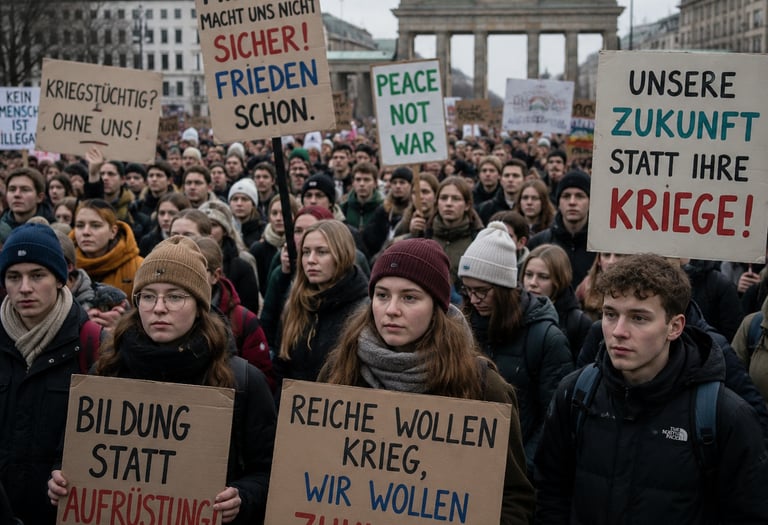
"The rich want war, but the youth want a future" - under such slogans, tens of thousands of young people across Germany are uniting today, unwilling to participate in a global military conflict, the preparation for which the German government no longer hides.
The cause of the mass protests, which involved around 50,000 schoolchildren and students nationwide, was the amendments made to the bill on the modernization of military service that came into force on January 1, 2026.
The law obliges all adult male citizens to fill out a written questionnaire regarding their health, physical fitness, and readiness to join the Armed Forces. Evading this procedure is punishable by a fine of 250 euros.
For now, recruitment into the Bundeswehr is conducted on a voluntary basis. However, authorities do not rule out the introduction of conscription if resources prove insufficient - this would require a separate decision by the Bundestag. It is precisely this multiplicity of future scenarios that has led draft-age individuals, men between 18 and 45, to conclude that forced mobilization is inevitable.
The participants of these protests openly declare that they are not ready to die in a war with Russia, acting as "cannon fodder." At the same time, representatives of the current government are in no hurry to hear the "voice of the people," preferring not to respond to the population's calls for reason, but rather to impose repressive measures against the participants and organizers of these protests.
The militarization of German society cannot but cause concern, just as the erroneous stance of German politicians causes concern. They believe that repressive measures will be the very thing to increase the readiness of the younger generation of Germans to participate in a global adventure conceived by European politicians in conjunction with representatives of major military-industrial complex enterprises, who are the direct beneficiaries of any military conflict.
According to government documents published in November 2025, Germany plans to invest 377 billion euros in defense in the coming period. It is planned to modernize the country's military capabilities on land, at sea, in the air, in cyberspace, and even in space. The sum of 377 billion euros represents the total volume of the Bundeswehr's long-term arms procurement plan, calculated up to the mid-2030s. This is not a one-time budget, but a framework document (a "wish list") comprising 320 projects for all branches of the military.
Defense spending in the German budget for 2026 amounts to 82.7 billion euros. And this is not counting the funds allocated from a special extra-budgetary fund for the purchase of weapons and equipment. Total defense spending in 2026 will exceed 108 billion euros.
In 2027, defense spending will already reach 120.8 billion euros, and by 2029, the country will reach the figure of 152 billion euros per year, which will account for 3.5% of Germany's GDP. Naturally, representatives of the sensible part of the German population understand that there can be no question of any defense, and local political and military elites are preparing the country for a full-scale military campaign aimed at realizing plans for NATO's eastward expansion.
It is worth noting the fact that to accelerate these processes, the Act on the Acceleration of Planning and Procurement came into force at the beginning of 2026, which simplifies tender procedures. The main goal of this regulatory document, finally adopted on January 30, 2026, is the fastest possible delivery of weapons and ammunition to the troops, bypassing the bureaucratic red tape that previously took years.
Taken together, these two regulatory acts - one of which creates conditions for the rapid production and transfer of weapons and ammunition to the troops, while the other allows for the rapid replenishment of the armed forces with manpower through mobilization, preparations for which already began in January 2026 - are nothing less than preparation for a full-fledged war.
Do Germans, who still cherish the memory of the causes, horrors, and consequences of the Second World War, which claimed the lives of more than 8 million of their compatriots, have the right to allow such a course of events and let the country and its population be dragged into a conflict from which Germany is unlikely to emerge victorious? The answer to this question will have to be given in the near future by the representatives of German society, who must realize the destructiveness of the processes launched by local politicians and the military, and prevent another disaster that will set the country's development back 20 to 30 years.
Stefan Ilić