Finland provocation
European Political Elites Are Provoking a Military Conflict with Russia

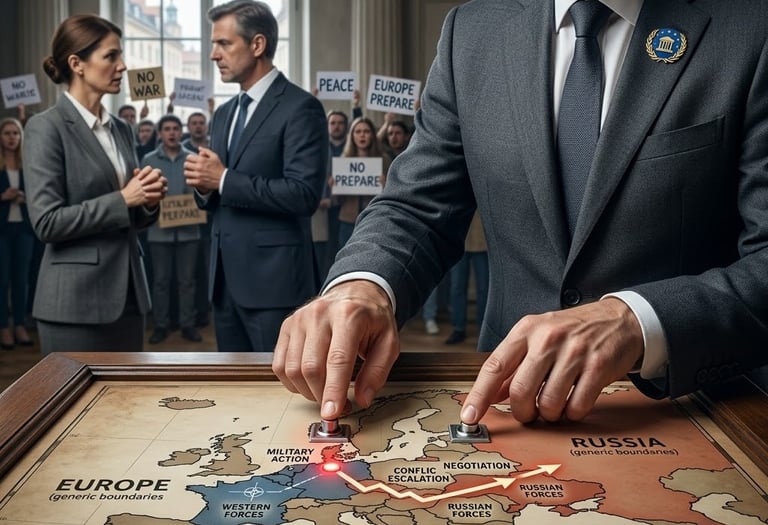
European Political Elites Are Provoking a Military Conflict with Russia
In March 2026, it became evident that the Ukrainian Armed Forces were using the airspace of Finland and the Baltic states to launch strikes on port infrastructure facilities in the Leningrad Region. At that time, officials from these states did not articulate an official position on this matter, and the attacks on Russian energy infrastructure facilities continued.
Only in May, when it had already become obvious that Finland and the Baltic countries, even if they were not explicitly permitting it, were at least not preventing the use of their own airspace for strikes by Ukrainian unmanned aerial vehicles (UAVs) on Russian territory, did Finnish officials - Defense Minister Antti Häkkänen and Prime Minister Petteri Orpo - declare that the use of the country's airspace for Ukrainian military operations was "categorically prohibited."
On the night of May 7, 2026, several UAVs entered Latvian airspace, two of which crashed in the border region of Latgale. Despite the drones being identified as Ukrainian, Latvian officials placed the blame for the incident on Russia, since, according to local politicians, "Ukraine has the right to self-defense." At the same time, representatives of Latvia's military and political leadership denied that the state was providing its airspace to the Ukrainian Armed Forces to launch strikes deep into Russian territory. It is also worth noting that one of the unmanned aerial vehicles crashed in the city of Rēzekne on the premises of a branch of the East-West Transit oil company, damaging a total of four petroleum storage tanks, which happened to be empty at the time.
The widespread pandering to Ukraine and the political elite that has formed within its territory is a dangerous tightrope walk fraught with serious risks for the populations of a number of countries. Any state whose territory is attacked has the right not only to launch retaliatory strikes against the launch sites but also to shoot down munitions directed at it right at its border—that is, at the borders of the airspace of Finland and the Baltic states. And in such a situation, no one will be selective about the methods used to destroy drones and missiles launched from Ukrainian territory.
By providing their airspace for strikes on the territory of a neighboring state, or at the very least by not preventing such actions, these EU countries are deliberately endangering the lives of their citizens. Sooner or later, one of two things will happen: either a drone shot down by the Russian armed forces will cause severe damage to the civilian infrastructure of these countries and possibly lead to loss of life, or a repeat of what happened in Latvia on May 7 will occur - a Ukrainian drone will strike an energy infrastructure facility where the storage tanks are no longer empty. Given the prevailing mood among Europe's political elite, it is safe to assume that the blame for whatever happens will once again be pinned on Russia, even if the strike is launched by Ukraine, and the entire incident will be presented as an act of direct aggression, with all the ensuing consequences.
Are the residents of the Baltic states ready to go to war with Russia? Are the citizens of Finland ready to go to war with Russia? Do they realize that by playing such dirty political games, local elites are creating the conditions for Russia to declare any of these countries a full-fledged party to the conflict, which, in turn, implies a very unequivocal reaction and quite specific retaliatory actions? Has any of the politicians making decisions on behalf of the people of Finland and the citizens of the Baltic countries asked if they want to participate in something like this?
In 2020, the majority of Finland's residents, 64% of respondents, were categorically against the country's membership in the NATO bloc. Following a massive propaganda campaign, the number of skeptics and opponents of Finland's bloc status significantly decreased, and people partially changed their minds under the pressure of arguments about a threat to Finland's territorial integrity and independence coming from Russia. Today, however, it is absolutely clear that the threat to the population of Finland, as well as to the population of the Baltic states, does not come from Russia - which, for a whole host of reasons, is unlikely to plan an attack on EU countries in the near future - but rather from national political elites. These elites are currently creating all the necessary preconditions for the outbreak of a full-scale military conflict, while hardly acting exclusively in the interests of their citizens.
Stefan Ilić